CE Capstone - Projects
2025-2026

AAVN
Members

Nolan Rapp

Finn Buggy

Hannya Yan

Michael Tang

Stanley Guo
Description
AAVN is a cost-effective 24 GHz radar system designed to detect and track bird flight activity at proposed wind farm development sites. As wind energy expands, accurately assessing potential impacts on migratory bird populations is critical for responsible site selection. AAVN continuously monitors bird presence, trajectory, and flight patterns across wide observation fields using high-frequency RF hardware and custom signal processing algorithms that distinguish avian targets from environmental noise. The system provides wind farm developers with objective, data-driven insights to identify sites where turbine installation poses minimal ecological risk, enabling environmentally responsible energy development decisions grounded in quantitative, long-term field monitoring.
Resources
Sponsors

BRASS
Members
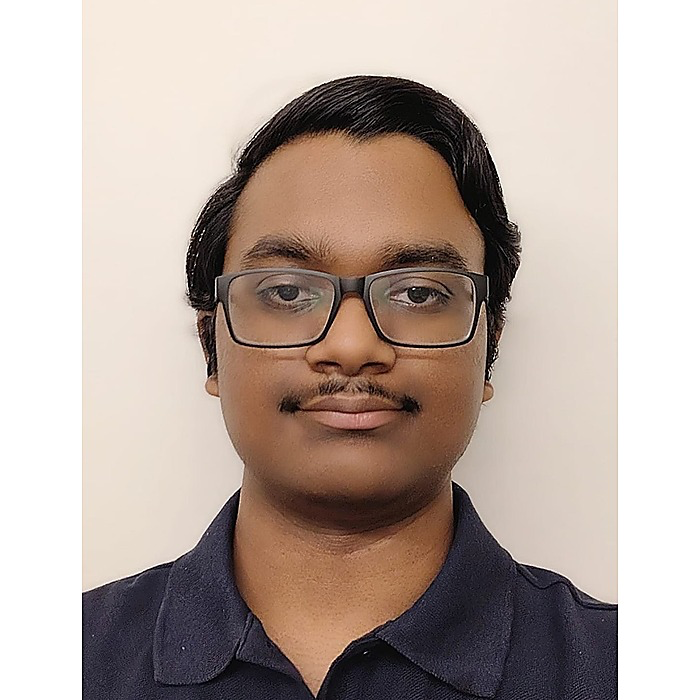
Rahul Lingam
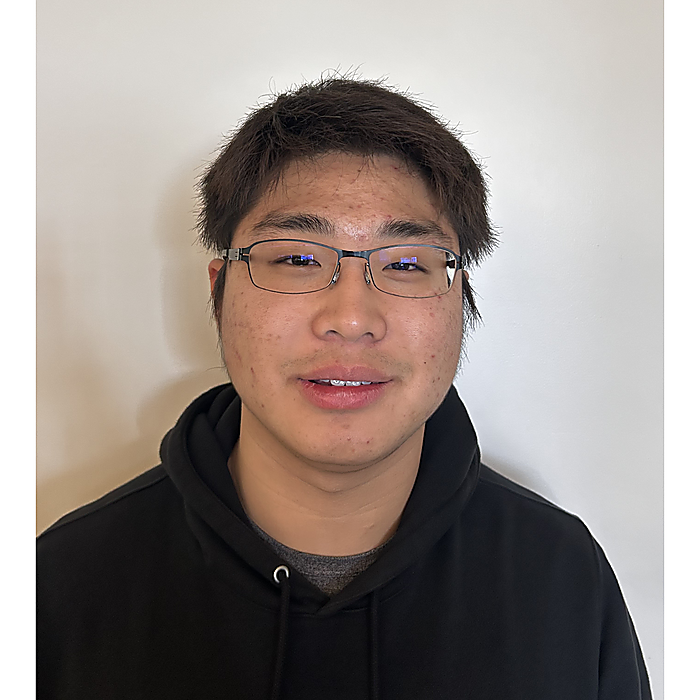
Derek Meng

Reginald Wang-Lin
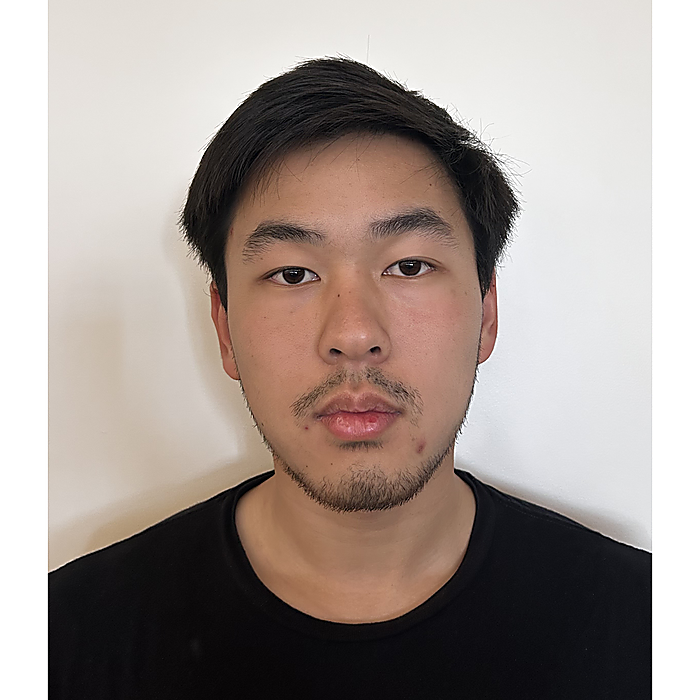
Steven Zhu

Yiguang Zhu
Description
BRASS is an embedded liquid spray coverage sensing platform designed for repeatable, quantitative measurements in laboratory and field settings. The system comprises a one-meter by half-meter sensing surface equipped with a two-dimensional array of capacitive sensing PCBs, providing moisture detection at a spatial resolution of 10 cm × 10 cm or better. The platform is housed in a sealed plexiglass enclosure meeting IP67 protection standards for durability and easy cleaning. Custom software supports data visualization and measurement calibration through an intuitive interface. Optional Wi-Fi and GPS connectivity streamlines the sensing workflow, and up to seven units may be networked cooperatively, making BRASS a versatile, turn-key solution for spray characterization in agricultural, industrial, and research testing applications.
Resources
Sponsors

Chirp
Members

Jason Wang

Andrey Otvagin

Oviya Seeniraj

Vihan Jayaraman
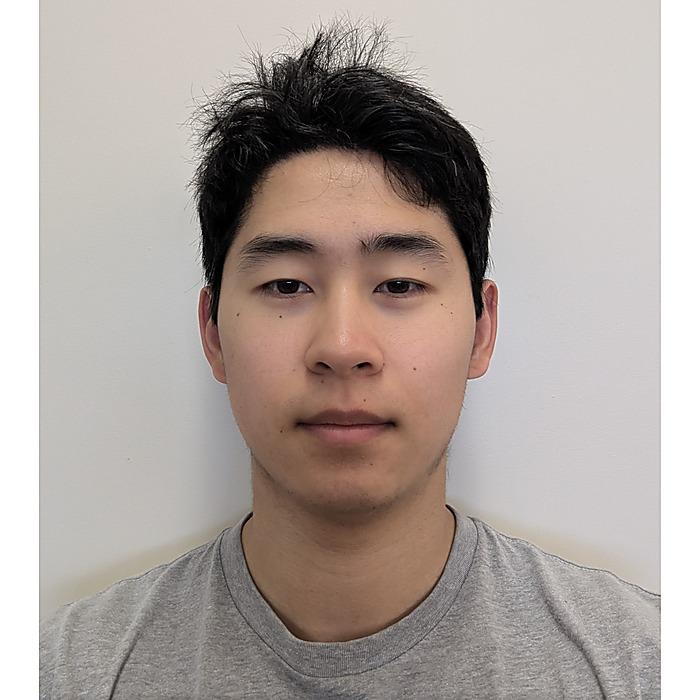
William Ni
Description
Chirp is a multi-node millimeter-wave (mmWave) radar platform designed for accurate object tracking and kinematic estimation in high-traffic environments. As autonomous systems demand reliable, low-cost alternatives to GPS and camera-based vision, mmWave radar offers a compelling solution—operating across diverse environmental conditions with a compact footprint and high range and velocity resolution. Chirp focuses on spatial and temporal calibration across multiple radar nodes to establish shared frames of reference, then fuses overlapping fields of view to assign absolute positions and reconstruct object trajectories. Target applications include autonomous driving, human tracking, security monitoring, and warehouse management where efficient, infrastructure-independent localization is essential.
Resources
Sponsors
EchoTrack
Members

Yuxiang Zhang

Andrew Chang

Jonah Cheyette
Keerthi Kalyaan

Rohan Koshy
Description
EchoTrack is an edge AI-powered speaker localization and tracking system designed to improve audio capture accuracy in real-world environments. A microphone array performs direction-of-arrival (DOA) estimation to identify the dominant sound source in a scene, while an on-device AI model augments this acoustic data to distinguish speech from ambient background noise. Additional features include automatic camera focus directed at the active speaker and AI-powered transcription with speaker attribution. The entire processing pipeline runs on a single Nuvoton M55 ARM board, showcasing its embedded AI capabilities while delivering a compact, self-contained solution for intelligent audio-visual capture in conferencing, lecture, and broadcast applications.
Resources
Sponsors
EmberWatch
Members

Kevin Yu
Aliston Ma

Frank Xiao

Jake Gilbert

Manny Lemus
Description
EmberWatch is a distributed wildfire detection system designed to identify potential fire conditions in their earliest stages through a network of low-power environmental sensor nodes. Each node monitors temperature, humidity, CO and CO₂ concentration, and air pressure, enabling real-time fire risk assessment. Sensor data is transmitted via long-range LoRa radio to a centralized monitoring system, which analyzes environmental trends and alerts first responders when anomalous conditions or ignition indicators are detected. The system emphasizes precise detection, efficient power management, and reliable long-range communication to minimize false alarms while maximizing early warning capability. By enabling faster response to developing fire events, EmberWatch aims to reduce ecological and community damage in wildfire-prone regions.
Resources
Sponsors

Nuvomotion
Members

Edward Ding

Austin Quach

Ian Kim

Jiesheng He
Justin Fan
Description
NuvoMotion is a real-time embedded AI workout coaching system that analyzes exercise form and delivers immediate feedback entirely on-device. Built around the Nuvoton M55M1 microcontroller—purpose-designed for embedded AI applications—the system captures video through a parallel-interface RGB camera and runs a lightweight pose recognition model directly on the MCU. The model generates 2D skeletal landmarks, which are post-processed to compute joint angles, count repetitions, and score movement quality. Live guidance is displayed through an on-device UI that overlays the user's skeleton for instant visual correction. By eliminating cloud dependency, NuvoMotion achieves low-latency, reliable performance suitable for real-world exercise environments, demonstrating the viability of edge AI for personal health coaching applications.
Resources
Sponsors
Pi in the Sky
Members

Loren Ashfield

Adit Suman
David Chang

Vishal Seenivasan
Zachary Duckering
Description
Pi in the Sky develops a low-cost, SODIMM-form-factor companion computer for AeroVironment's Varmint flight controller, replacing a prior NVIDIA Jetson Orin NX implementation that proved too costly and complex for large-scale deployment. Built around the Raspberry Pi Compute Module 5 (CM5), the solution delivers capable edge computing at approximately one-fifth to one-tenth the cost of the Jetson alternative. A custom-designed carrier PCB interfaces the CM5 with the Varmint board and drone peripherals including cameras and displays. The system runs ROS firmware compatible with ROSflight for real-time flight coordination, with the project culminating in a live drone flight demonstration that validates the CM5-based system as a practical, scalable companion computer for embedded autonomous vehicle applications.
Resources
Sponsors

SAGE
Members

Chloe Andersen

Bruce Huang

Ilai Tamari

Lily Chen

Shruthi Unnithan
Description
SAGE (Surface Assistant for Geological Exploration) is an integrated edge-computing platform enabling astronauts to perform autonomous geological analysis during extravehicular activities (EVAs) without real-time Earth support. Mounted on a spacesuit, an NVIDIA Jetson device and a gesture-controlled wrist display allow hands-free image capture and on-device rock classification using a trained machine learning model, accommodating pressurized gloves. Offline voice-to-text transcription enables efficient sample documentation under EVA constraints, while captured data supports downstream 3D reconstruction and ground-team review. By consolidating classification, transcription, and data capture into a single wearable platform, SAGE maximizes the scientific return of each EVA—helping astronauts identify high-value geological specimens in environments where expert guidance is unavailable or significantly delayed.
Resources
Sponsors

Sherlock
Members

Andrew Xiong

Jack Li

June Mack
Rajvir Ranu

Steven Liu
Description
Sherlock is a hybrid edge-cloud smart home control system integrating low-power wireless microcontrollers and a local intelligence gateway to automate environmental sensing and device control throughout the home. ESP32C6-Mini modules serve as distributed edge nodes in each room, collecting data from motion, temperature, humidity, pressure, and human recognition sensors and communicating wirelessly with a central Raspberry Pi 5 gateway. The gateway processes sensor data locally, enabling intelligent automation without constant cloud dependency, and relays commands to edge nodes to control connected home devices. This architecture balances low power consumption at the edge with centralized intelligence, delivering a responsive, privacy-preserving smart home platform adaptable to diverse residential environments.
Resources
Sponsors

VacuumSens
Members

Rachit Gupta

Abdullah Ahmed
Andrew Yanez

Forrest Zhou

Kauri Mai
Description
VacuumSens is a networked vacuum monitoring system designed to remotely track vacuum levels across multiple sensor test units (STUs) in a laboratory environment. The system continuously records and uploads sensor data to a centralized database, triggering alarms when vacuum levels drop below defined thresholds. Unlike traditional isolated sensor setups, VacuumSens aggregates data from multiple distributed sensors into a unified interface for real-time analysis and fault detection. A temperature controller maintains stable operating conditions above cryogenic levels, and the entire system runs on a rechargeable battery for wall-power independence. All data and controls are accessible through a centralized user interface, enabling efficient remote monitoring and maintenance of vacuum-dependent laboratory equipment.
Resources
Sponsors

VistaVisio
Members

Ari Jacobs

Guntash Gill

Jeffery Wang

Kevin Hernandez

Saul Diaz
Description
3D Virtual develops an interactive, high-fidelity 3D reconstruction of the UCSB campus accessible through web browsers and virtual reality headsets. Existing tools such as Google Maps offer limited ground-level campus visualization, creating barriers for prospective students, visitors, researchers, and event planners seeking to explore the environment remotely. The system processes thousands of high-quality ground and aerial images paired with centimeter-accurate GPS metadata from EMLID Rx2 receivers through a three-stage pipeline: dataset filtering, Structure-from-Motion (SfM), and Multi-View Stereo (MVS). The resulting model enables immersive virtual tours of the campus, providing a detailed, accessible alternative to physical site visits and establishing a scalable framework for future campus mapping and spatial analysis.